

Waterproof Connector T-TFG: Contents
Where this form factor originated and the key misconceptions
Field practice: non-obvious application areas
Where it won't work and its limitations
Installation and maintenance: subtleties not mentioned in the manual
Market overview and why choosing a supplier is about more than just price
When talking about waterproof connectors, many people immediately think of ocean depths or industrial washdowns, but the T-TFG connector specifically is a bit more interesting — and a bit more complex.
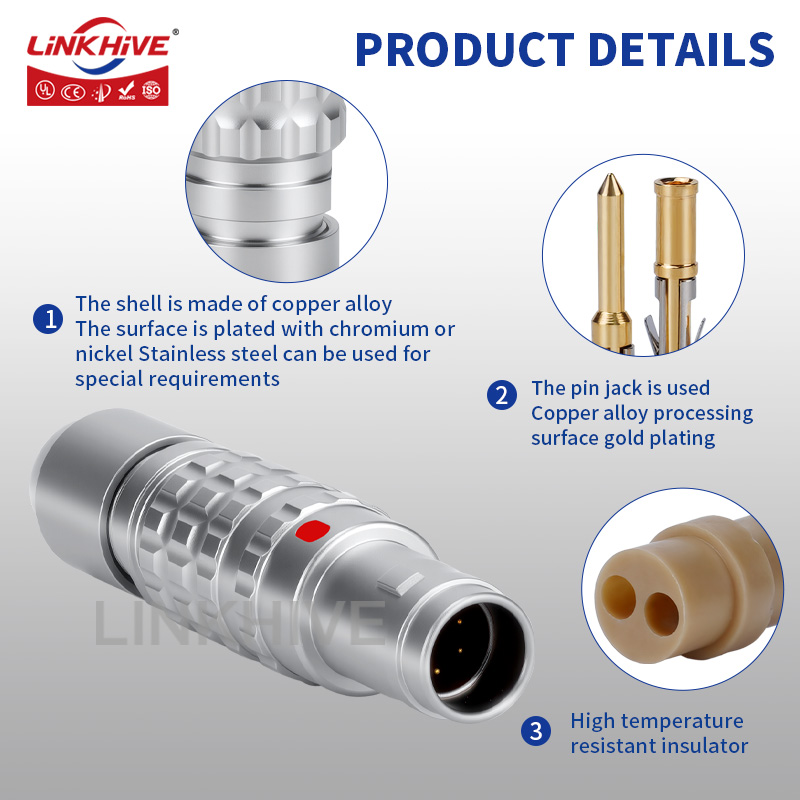
It is often viewed narrowly, only as a solution for extreme conditions, overlooking a multitude of everyday yet critically important applications where contact reliability matters more than ruggedness.
I'll try to break it down based on my personal experience.
Where this form factor originated and the key misconceptions
When I first saw the waterproof T-TFG connector in a catalog, it seemed like just another "all-weather" solution among hundreds. The main misconception is to think that its IP67 or IP68 rating is a panacea against any liquid. In practice, the rating is based on laboratory conditions.
For instance, continuous immersion in water with currents and abrasive particles is a different story altogether. The second myth is that it's suitable for any high-frequency application.
No, its design is primarily about mechanical durability and maintaining contact under vibration, not about ultra-high frequencies.
Structurally, the key here is the two-stage self-locking latch. It's not a screw connection, but a push-pull one. This is a game-changer in tight spaces where there's no room to maneuver with a wrench.
I recall a project involving installation on a moving platform — standard screw connectors would start to "work loose" from vibration, while the T-TFG, latched with a distinct click, held firmly. But there's a nuance here: if the connection isn't fully engaged, the moisture protection is compromised. I've seen such mistakes on sites.
There are many suppliers, but not all ensure consistency. For example, I noticed the waterproof T-TFG connector from Dongguan Linghan Precision Electronics Co., Ltd. (their website is linkhiveconnectors.com) precisely because of their emphasis on precision.
Their description reflects an understanding that this isn't just a "housing with a rubber seal," but a system where contact geometry and the quality of the sealing ring are crucial.
The company positions itself as an integrator of R&D and manufacturing, which in practice often means better parameter controllability compared to pure assemblers.
Field practice: non-obvious application areas
Of course, the classic applications are outdoor lighting, LED screens, and surveillance cameras.
But a more interesting case is agricultural machinery. Not just combines, but, say, drip irrigation systems with humidity sensors. There's constant moisture, dust, and fertilizers (which are aggressive towards plastics).
The waterproof T-TFG connector wins here over classic terminal blocks in enclosures because it allows for quick-disconnect service modules. We can change a sensor in a minute without tools.
Another niche is small unmanned vehicles: drones for monitoring, underwater vehicles. Here, weight and size come to the forefront. The waterproof T-TFG connector is compact enough, but the main thing is that its connection doesn't loosen from constant jolts during landing or waves on the water.
True, for seawater, you must check the corrosion resistance of the housing material and seals. I had an experience where money was saved on this — after one season, the contacts were covered in oxides.
Automotive peripherals, not the most critical for safety but important for reliability — vehicle monitoring systems, GPS trackers, connecting additional sensors in the body. Vibration, temperature swings from -40 to +85°C, condensation. Here, the T-TFG is often used as an interface between the control unit and an external module. It's convenient for assembly line production and for subsequent repairs in service centers.
Where it won't work and its limitations
It's important to understand that waterproofing isn't absolute. For example, for prolonged immersion under high pressure (deep-sea equipment), you need completely different, hermetically sealed connectors with metal housings and cable glands. The T-TFG is more for protection against splashes, jets, and temporary immersion.
Also, don't install it in areas with constant UV exposure without special UV-resistant plastic — the material may become dull and brittle.
Another limiting factor is current and voltage. Typically, these are solutions for low-current circuits, signals, sensors, not for power loads.
Although there are modifications for higher currents, you need to pay attention to contact cross-section and heat generation. In one project involving cooling fans on a tower, we had to abandon the waterproof T-TFG connector precisely because of heat dissipation — we switched to a power version with screw locking.
And, of course, price. Using it in a simple panel in a dry room would be overkill. Its justification begins where connector failure leads to downtime, expensive repairs, or data loss. Therefore, it's often found in telecommunications equipment at base stations, where maintenance is infrequent but must be fast and reliable.
Installation and maintenance: subtleties not mentioned in the manual
It seems simple: connect and latch. But there are details. First, cable preparation. If it's a stranded wire, it needs to be properly terminated so the strands don't fray and interfere with the seal. It's better to use ferrules or soldering.
Second, the latching action. There should be a distinct, firm click. If there's no click, either it wasn't fully engaged or there's a defect in the latch. I recommend tugging on the cable with moderate force after installation.
The O-ring is the heart of the system. It needs to be checked periodically for elasticity and the absence of micro-cracks. During installation, ensure it's not misaligned and is properly seated in its groove.
Good practice is a light application of silicone grease to preserve its properties and ease assembly. But not regular oil! It can damage the rubber.
When it comes to disassembly, care is needed. Most models have a locking mechanism that must be pressed before separating the halves. If you just pull on the housing, you can break the latch. It's better to hold the housing, not the cables. In field conditions, especially in freezing temperatures, plastic becomes brittle — this should also be considered.
Market overview and why choosing a supplier is about more than just price
There are many players in the market, from well-known global brands to Chinese manufacturers. The price spread can be several times over. But a cheap connector is always a gamble. Maybe you'll get lucky.
Maybe you won't: substandard plastic, poor plating on the contacts, inaccurate geometry leading to a poor seal or weak locking. Saving 50 rubles on a connector can lead to hours of troubleshooting and system downtime.
Therefore, for critical applications, I lean towards proven manufacturers who specialize specifically in connectors, rather than making them as an "add-on" to their main product line.
Take, for example, Dongguan Linkhive Cables Co., Ltd. (information available at https://www.linkhiveconnectors.com/). In their case, the emphasis on "precision electronics" and the full cycle from development to service often means stricter quality control at the output. This is especially true for two-stage self-locking solutions — their specialty. For a standard project, their catalog can serve as a reliable baseline.
Conclusion
In conclusion, returning to the question of "where it is used." The waterproof T-TFG connector isn't for everyone, but where fast, reliable connection is needed in environmental conditions involving dust, moisture, and vibration, it becomes an almost indispensable tool.
The main thing is to understand its real capabilities (not the advertised ones), install it correctly, and not skimp on the little things like the sealing ring. Then it will serve its lifespan perfectly.