

Circular Connector B Series TGG Plug: Do You Really Understand Its Corrosion Resistance?
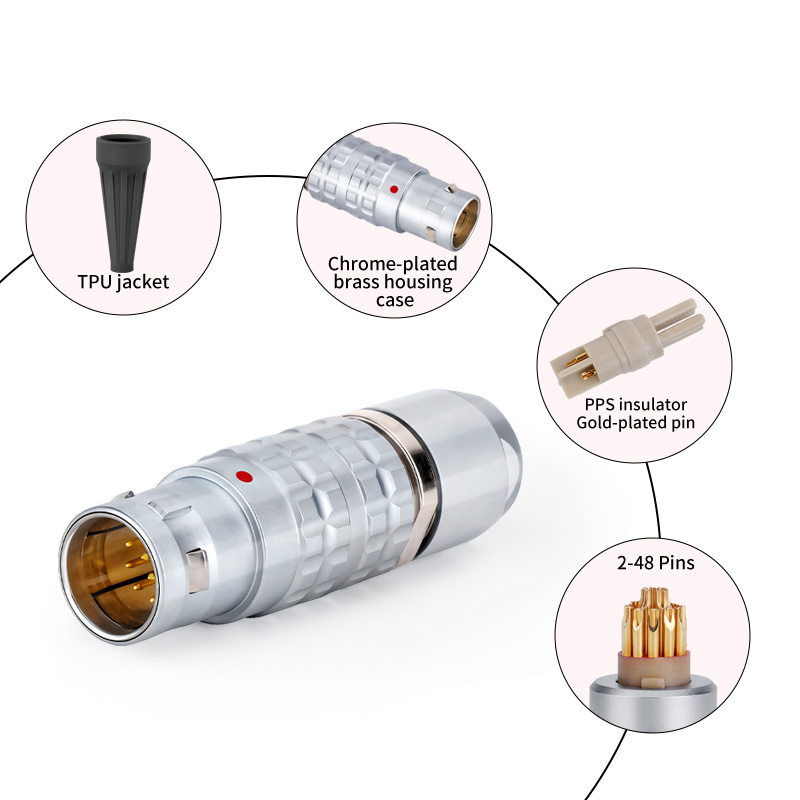
In modern industrial and outdoor electronic equipment connection systems, circular connectors are widely used due to their rugged structure and reliable sealing. The B Series TGG plug, as a common specification, has gained an important position in military, communication, energy, rail transit, and other fields thanks to its high-strength metal shell and stable contact performance. However, many engineers and field maintenance personnel encounter a question during actual use:
"The B Series TGG plug has a metal shell, right? Why do rust-like spots still appear on the surface of the shell or contacts after a period of use?"
This leads to a more fundamental question:
Is the B Series TGG circular connector prone to rust?
If so, what causes it?
If not, what are those rust-like substances?
This article will explain from multiple perspectives, including metal materials science, the connector's operating environment, corrosion principles, and proper maintenance, to reveal the truth about "rust" on B Series TGG plugs. It will also guide you on how to distinguish between "real rust" and "false rust," and how to properly maintain the connector to extend its service life.
Why is the B Series TGG plug considered corrosion-resistant?
To answer the core question, "Is the B Series TGG plug easy to rust?", we must first understand the materials used for its metal shell and contacts, as well as their anti-corrosion principles.
Typical metal parts and material characteristics of B Series TGG plugs:
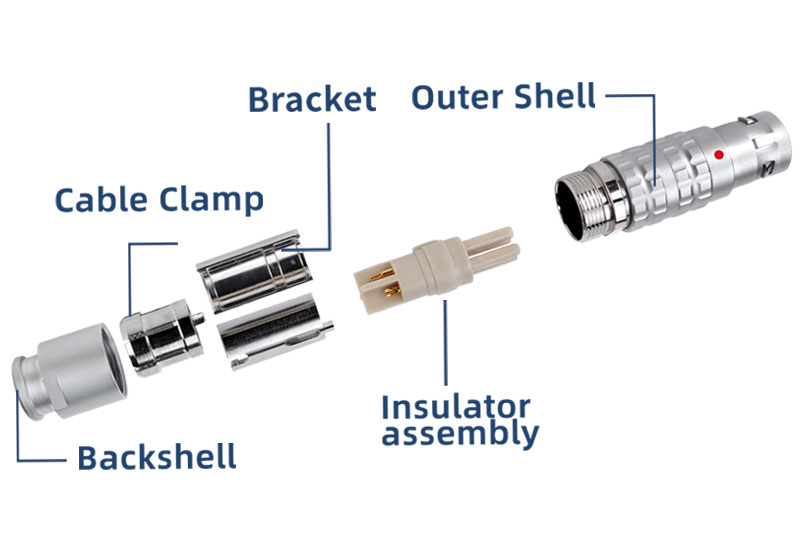
Shell: Usually made of aluminum alloy or copper alloy, with surface treatments such as chrome plating, nickel plating, or anodizing.
Contacts (pins/sockets): Mostly made of copper alloys (e.g., brass, phosphor bronze), with surfaces plated with gold, silver, or nickel.
Insulator: High-performance engineering plastics (e.g., PPS, PEEK), not involved in rusting.
It is these protective platings on the metal surfaces that give the B Series TGG plug its basic corrosion resistance. Taking the most common nickel plating and chrome plating processes as examples, they form a dense passive film on the metal surface. This film:
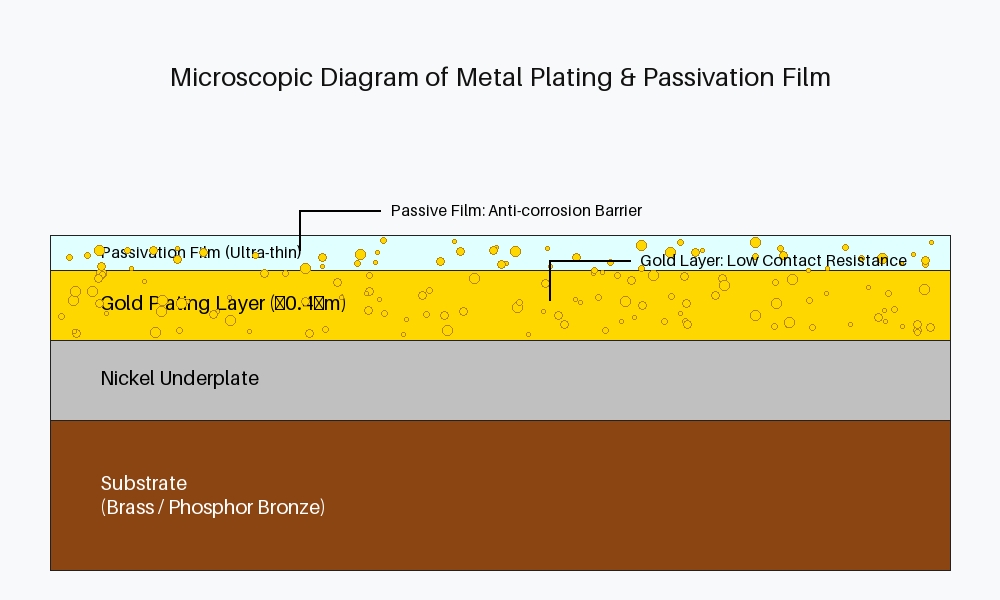
Prevents oxygen from contacting the internal base metal (copper, aluminum)
Resists moisture, salt spray, weak acids, and weak alkalis
Has a certain self-repairing ability (re-oxidizes in air to form a new protective film)
Therefore, under normal indoor or general industrial environments, the B Series TGG plug itself is not prone to rusting.
However, "not prone" does not mean "absolutely not." Metal connectors are not indestructible components, but rather relatively more corrosion-resistant.
Will the B Series TGG plug really rust?
The answer is: Under certain conditions, rust spots may appear, but in most cases, the rust does not come from the plug's own base material.
Two key facts need clarification:
1. A qualified B Series TGG plug is not prone to rust
If the plug uses compliant materials and standard plating processes, and if the operating environment lacks destructive chemicals, its metal shell and contacts can remain rust-free for many years.
2. However, the surface of the B Series TGG plug "is prone to rust-like stains"
These stains are often mistaken for "plug rust," but their real sources are usually:
Adhesion of external iron dust (industrial environments, cutting/grinding operations, near railways, etc.)
Electrolyte or conductive stains (electrochemical corrosion products formed by moisture and通电)
Oxidation of the underlying copper alloy after contact plating wears off (appears green or black, not reddish-brown iron rust)
Residue from incorrect cleaning methods
This is why many people mistakenly believe "the B Series TGG plug has rusted" — it is actually external deposits or corrosion products transferred from adjacent components, not corrosion of the plug's own material.
Why do rust-like spots appear on the surface of B Series TGG plugs?
To fully answer the question "Is the B Series TGG plug prone to rust?", it is essential to understand which external factors in its operating environment can damage the surface protective layer.
The following are the main causes of rust-like spots on the surface:
1. Is the protective layer on the plug surface damaged?
If the nickel plating, chrome plating, or anodized film is damaged, the underlying copper or aluminum alloy base metal will be exposed to air. In a humid environment or in the presence of corrosive media, oxidation or corrosion will occur, manifesting as "rust spots."
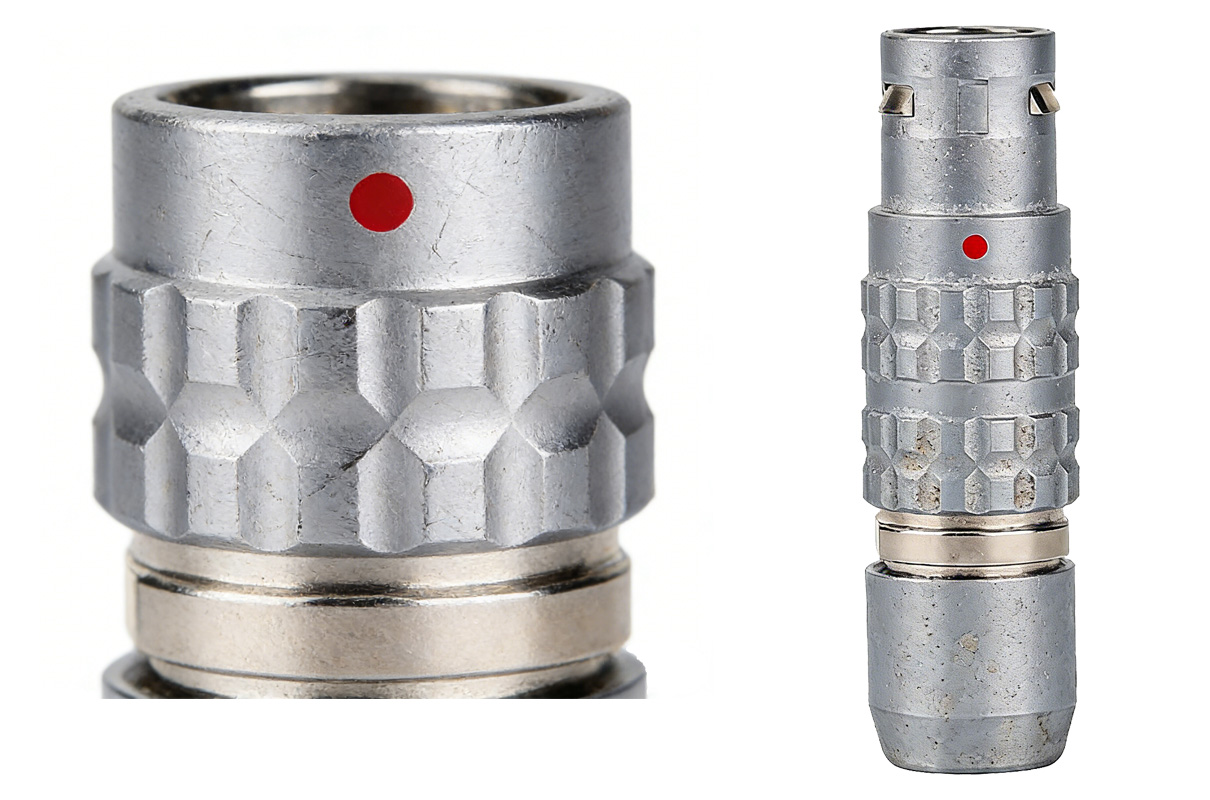
Common causes of protective layer damage include:
Mechanical scratches: Improper insertion/withdrawal force, scraping the shell with hard metal objects
Chemical corrosion: Exposure to strong acids, strong alkalis, salt spray, or organic solvents
Electrochemical corrosion: Long-term contact with a different metal (e.g., iron, carbon steel) in a humid environment, forming a galvanic cell
Among these, chloride ions (Cl⁻) are the "number one enemy" of metal passive films. In coastal, chemical, or environments where chlorine-containing disinfectants are used, B Series TGG plugs can indeed experience pitting corrosion.
2. External iron powder or iron filings adhering to the plug surface
This is the most common cause of "false rust," but it is often misunderstood as the plug itself rusting.
For example:
Iron dust from on-site cutting, welding, or grinding falling onto the plug shell
Rust from cabinets or brackets vibrating loose and adhering
Wear particles from maintenance tools (e.g., iron screwdrivers)
These iron particles rapidly oxidize in humid air to form reddish-brown rust, but the rust is on these external iron particles, not on the B Series TGG plug's own material. This is "external rust," unrelated to the plug's inherent corrosion resistance.
3. Humid environment and electrochemical effects
In environments with high humidity, salt spray, or industrial pollution, a thin water film forms on the plug surface. If this water film contains electrolytes (salts, ions), and if the plug shell is in contact with a different metal (e.g., an iron enclosure), galvanic corrosion occurs. The more active metal (e.g., aluminum, iron) will corrode faster, and the corrosion products may contaminate the plug surface, making it look like the plug has rusted.
4. Oxidation of the contact after plating wear
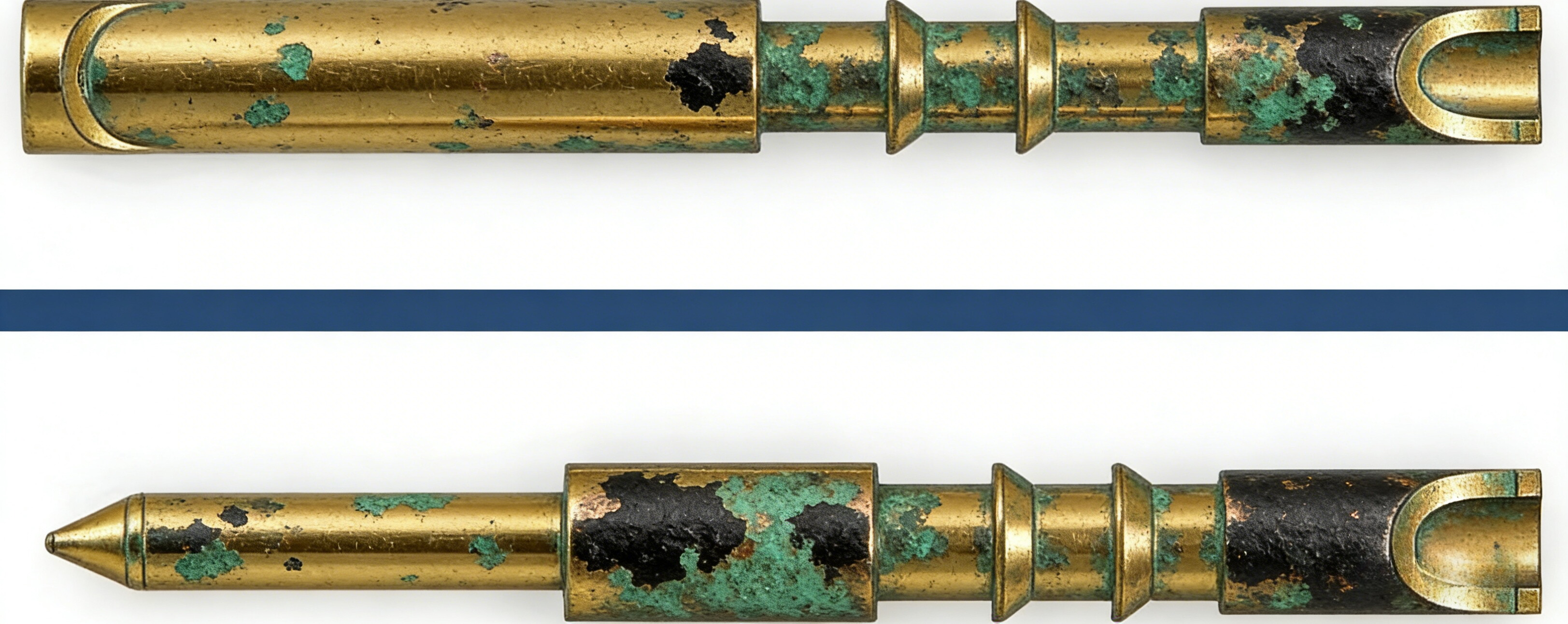
Frequent plugging and unplugging can wear away the gold plating on the pins or sockets, exposing the underlying copper alloy. Copper oxidizes in humid air to form patina (basic copper carbonate) , which is green or black, not the red of iron rust. However, ordinary people tend to call it "rust."
5. Incorrect cleaning and storage
If not cleaned regularly, or if cleaned with chlorine-containing or strongly acidic cleaners, the surface protective layer will be directly damaged. Additionally, storing without protective caps, allowing dust and moisture to enter, will accelerate corrosion of the metal parts.
Are the rust spots on the B Series TGG plug "false rust" or "real rust"?
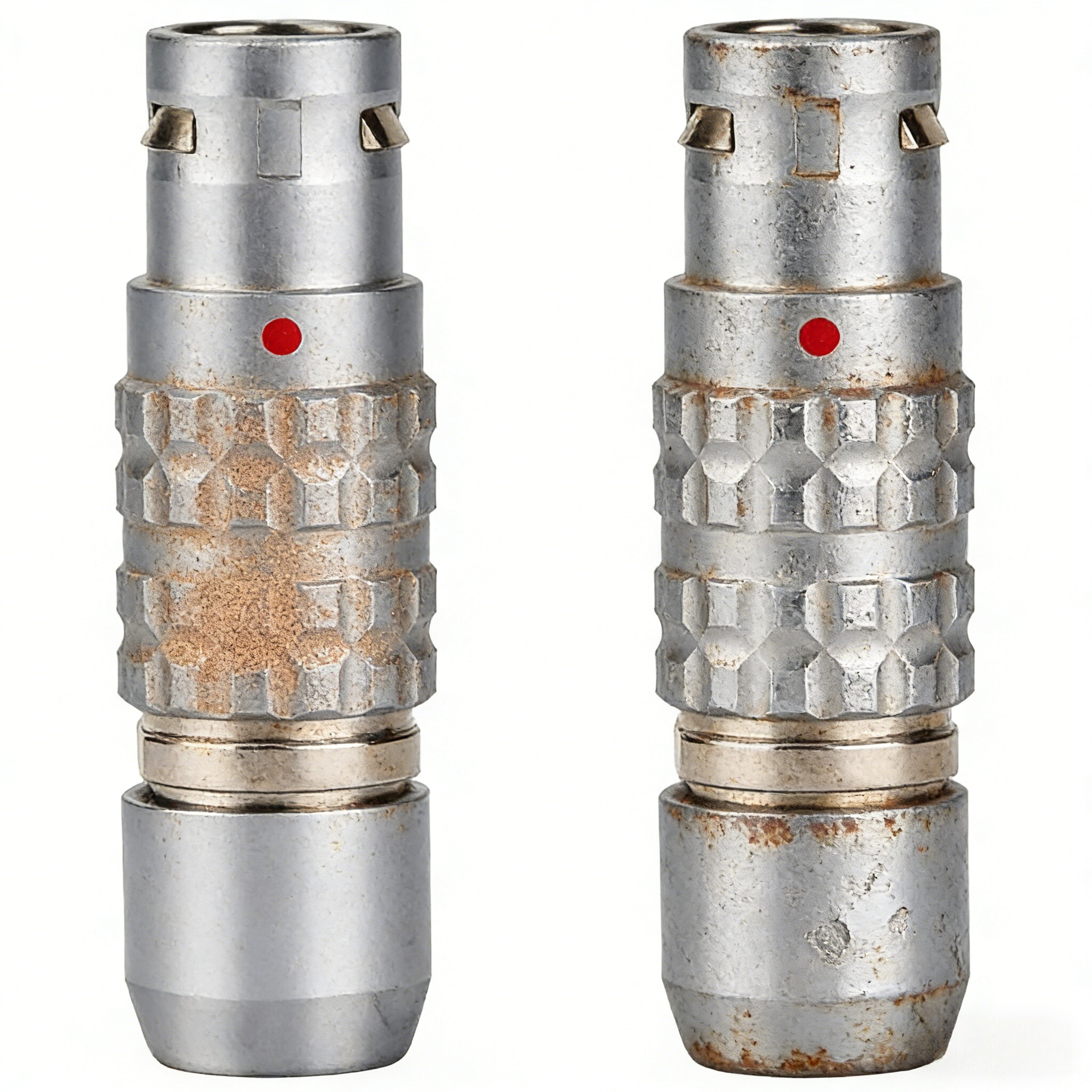
When you see brown or reddish-brown spots on the plug surface, you need to distinguish carefully:
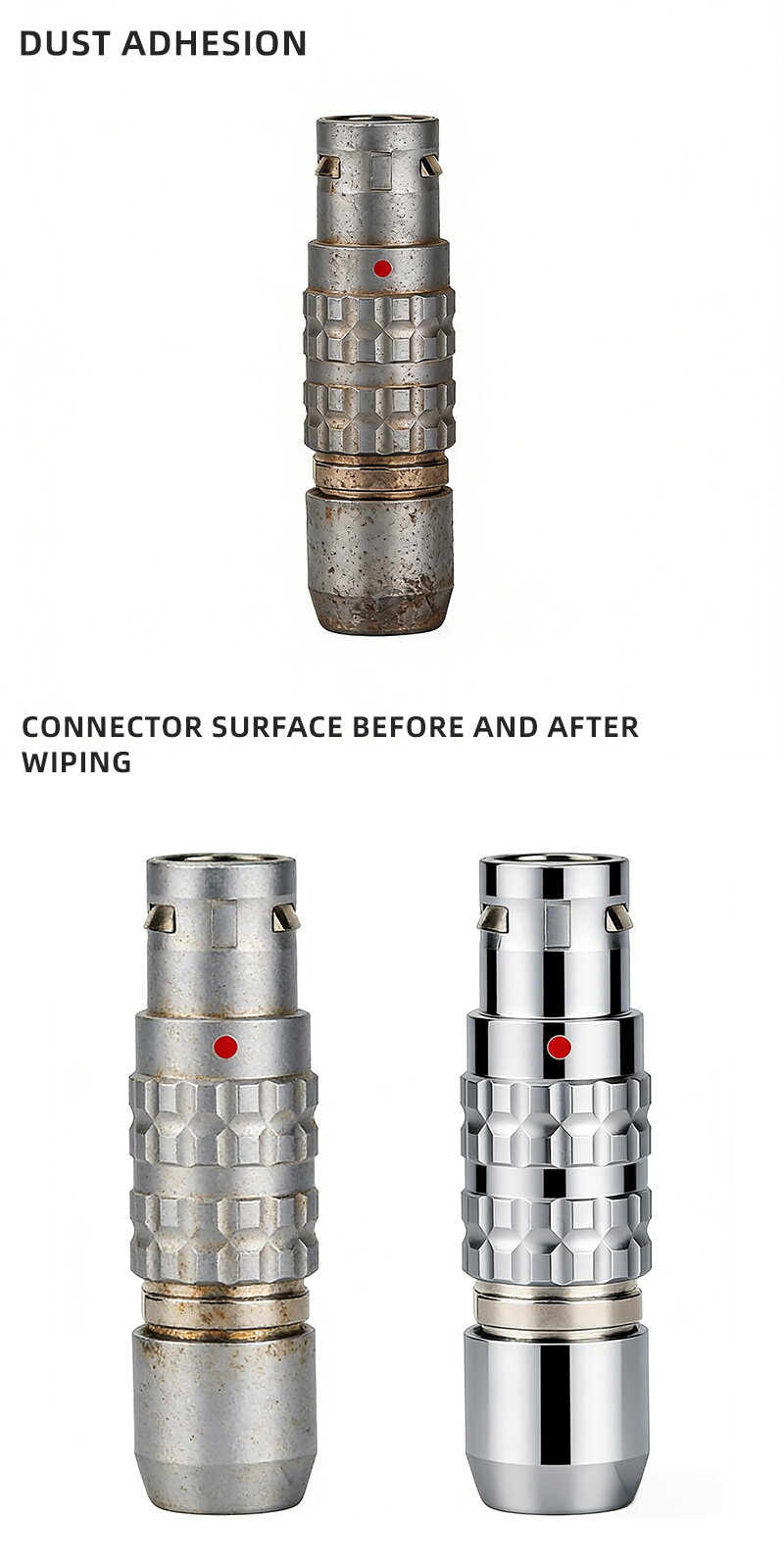
1. "False rust" (the majority of cases) – External iron rust adhesion
Characteristics:
Can be wiped off with a soft cloth and neutral cleaner
Appears powdery, without accompanying pits
Common in environments with heavy industrial dust
After wiping off, the plug surface is intact
This type of rust is not from the B Series TGG plug itself, but from the adhesion of external iron oxides.
2. "Real rust" (surface pitting or plating peeling) – Rare
Characteristics:
Cannot be wiped off; there are obvious etching pits, pits, or peeling on the surface
Often seen in areas where the protective layer has already been damaged
Often accompanied by long-term humidity, salt spray, or exposure to corrosive chemicals
This type indicates that the plug surface has undergone substantial corrosion, and it is necessary to assess whether the electrical performance and sealing reliability are affected.
Which usage habits most easily make the B Series TGG plug "look rusty"?
The following are the most common mistakes:
1. Using the plug without protection in a dusty environment
Metal dust accumulates over time, absorbs moisture, rusts quickly, and contaminates the plug surface.
2. Leaving the plug exposed to a humid, salt-spray environment for a long time without cleaning
Especially in coastal areas, chemical plants, and marine equipment, salt accelerates electrochemical corrosion.
3. Direct contact with iron parts in a humid environment
Forms a galvanic couple, accelerates rusting of the iron parts, and rust stains contaminate the plug.
4. Using strong acids, strong alkalis, or chlorine-containing cleaners to wipe the plug
Damages the nickel or chrome plating, exposing the base metal.
5. Violent operation during insertion/withdrawal, scratching the shell or contacts
Mechanical damage is the primary cause of protective layer failure.
How to keep the B Series TGG plug rust-free for a long time?
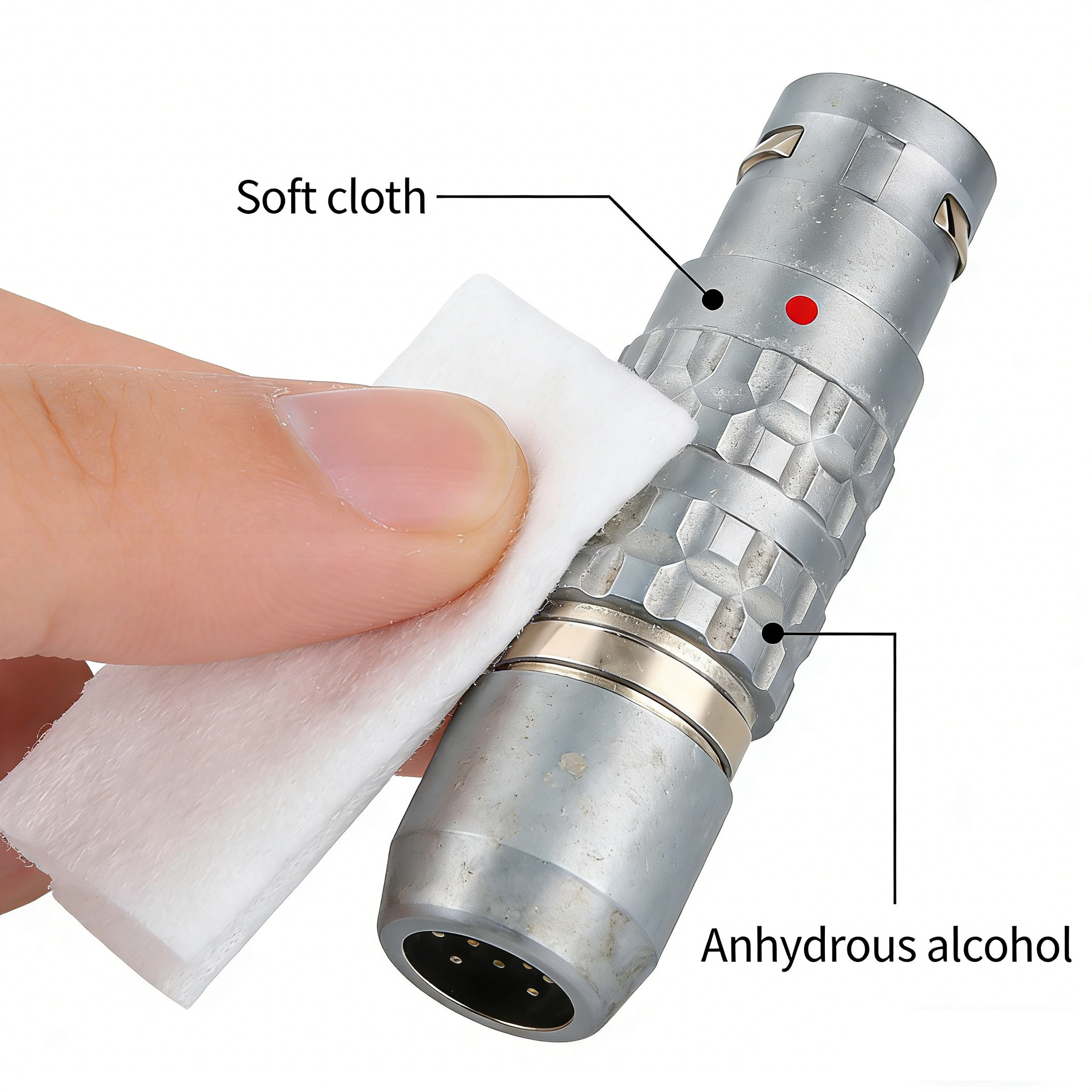
Although the B Series TGG plug itself has a good corrosion resistance foundation, correct use and maintenance are essential to ensure long-term reliability.
1. Control the operating environment
Install in dustproof and moisture-proof enclosures or junction boxes whenever possible
For outdoor or harsh environments, choose models with protective caps or higher sealing ratings
2. Clean regularly
Use anhydrous alcohol or neutral electrical cleaner with a soft cloth to gently wipe the shell and contacts
Avoid steel wool, sandpaper, or hard brushes
3. Cover with protective caps when not in use
Prevent dust, moisture, and salt spray from directly contacting metal surfaces.
4. Avoid prolonged direct contact with dissimilar metals
If contact with an iron panel or enclosure is unavoidable, add an insulating gasket or apply protective grease.
5. Choose a higher-grade surface treatment for severe environments
For highly corrosive environments, select B Series TGG plugs with thicker gold plating, stainless steel shells, or special anti-corrosion coatings.
Does the rust resistance of the B Series TGG plug depend on material and process?
It has an influence, but it is not the absolute factor.
Shell material: Anodized aluminum alloy shells have better corrosion resistance than ordinary nickel-plated treatments; copper alloy shells with nickel/chrome plating are much better than untreated copper.
Plating thickness: Thicker gold or nickel plating provides better scratch and corrosion resistance.
Sealing structure: The better the rear seal and interface seal, the less likely internal contacts are to get damp and rust.
However, no matter how good the material, it is difficult to avoid corrosion if the operating environment is harsh and maintenance is lacking.
Conclusion: Is the B Series TGG plug prone to rust?
From the perspective of materials and process:
✔ A qualified B Series TGG plug itself has good corrosion resistance (under normal use conditions)
From the perspective of the actual use environment:
✔ Its surface is prone to developing rust-like deposits (external iron powder, contaminants, etc.)
The real causes of the B Series TGG plug's own rust are:
Mechanical damage to the protective layer
Long-term exposure to corrosive chemicals (salt, acid, chlorine)
Galvanic corrosion from contact with dissimilar metals in a humid environment
Lack of regular cleaning and maintenance
In short:
A B Series TGG plug is not absolutely rust-proof, but rather it does not rust easily under correct use and maintenance; however, rust can indeed appear in harsh environments or under incorrect operation. Distinguishing between "false adherent rust" and "true corrosive rust" is the key to properly maintaining and extending the service life of the connector.
What benefits do long-term partners gain?
For customers who regularly purchase B Series TGG plugs in bulk, choosing a reliable supplier provides stable quality, competitive pricing, priority scheduling, and early access to new product iterations. Distributors and integrators also benefit from fast response times, continuous technical support, and strong supply capabilities. A quality supplier aims to create sustainable, long-term purchasing relationships based on trust and mutual growth.
Get the latest price or technical support? We will reply as soon as possible (within 12 hours).