

What Forces Are Reshaping the Global Push Pull Connector Market in 2025?
In 2025, the global connector industry is entering one of the most transformative phases in recent decades. Among all sub-segments, the push pull connector category—especially miniature connectors, military audio connector assemblies, watertight circular connector modules, and break away connector systems—is witnessing an accelerated shift in technology, supply chain structure, and cross-industry integration. These shifts are not isolated events; they are the result of converging geopolitical changes, rising environmental expectations, automation demand, electrification, and the global expansion of defense and aerospace communication systems.
Across Europe, Asia, and North America, manufacturers are not only redesigning mechanical interfaces but also re-engineering internal signal architectures. The push pull connector—historically viewed as a specialized niche product—is now becoming a universal interconnection solution across medical devices, military communication headsets, environmental testing instruments, industrial robotics, and portable sensing equipment. As demand skyrockets, companies are asking: What exact forces are reshaping this field, and how should manufacturers respond?
This first section of the 20-part, 50,000-word international industry report explores the foundational trends. The sections that follow will go deeper into supply chains, materials science breakthroughs, regional competition, and long-term shifts in mechanical design standards.
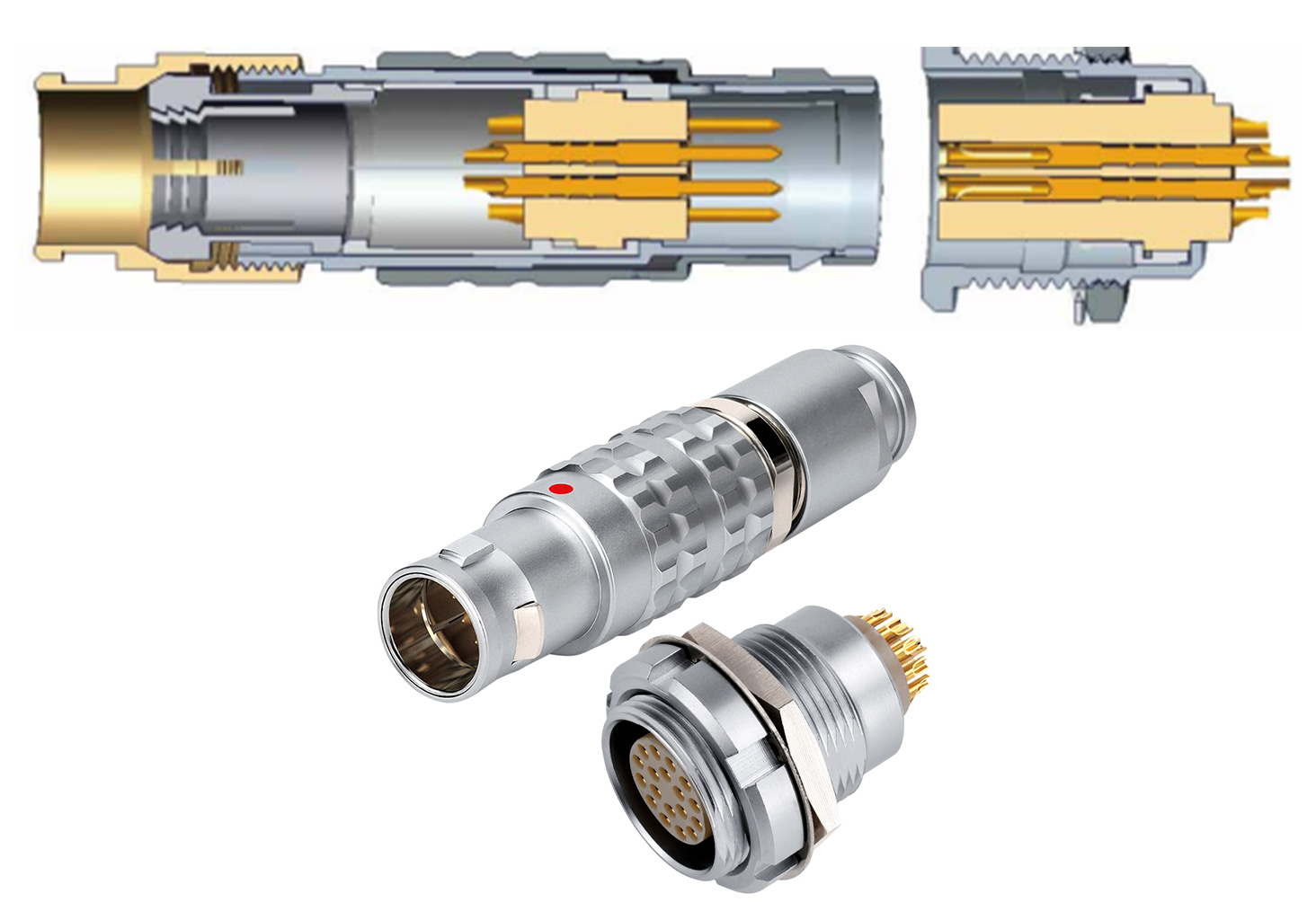
What Market Dynamics Are Driving the Demand for Miniature Connectors?
The surge in miniature connectors is one of the most defining trends of the 2025 connector industry. While miniaturization has been developing for over a decade, the current acceleration is unprecedented.
The Rise of Ultra-Compact Medical Devices
Medical device designers are aggressively shrinking their products. Handheld ultrasound probes, ambulatory monitors, capsule endoscopy units, wearable infusion pumps, and portable diagnostic analyzers all require miniature push pull connectors with stable mating cycles, EMI resistance, and lightweight construction. Hospitals increasingly prefer equipment that can be sterilized and swapped quickly. This expands the market for stainless-steel and high-performance polymer miniature connectors, especially those with a push pull connector locking mechanism for emergency scenarios.
Growth of Modular Sensor Platforms
Environmental sensors, industrial IoT nodes, and portable test instruments are undergoing functional expansion while keeping overall volume constant. Designers cannot afford bulky interface points. As a result, miniature connector sales in 2025 are rising sharply in aerospace telemetry, drone payload systems, and geographical mapping equipment. The push pull interface is favored for its ability to be mated blindly with one hand—an essential requirement for field engineers and UAV technicians.
Higher Density Signal Requirements
Dense PCB layouts now demand connectors with more contacts in less space. This is pushing engineers to adopt miniature push pull connector families for hybrid configurations that mix data + power + control lines. In this environment, miniature connectors are no longer optional—they are mandatory in next-generation instrumentation.
What Factors Are Fueling the Expansion of Military Audio Connector Systems?
A dramatic resurgence in global defense investment has led to a renewed focus on military audio connector systems. Defense communication gear—headsets, field radios, encrypted intercom terminals, tactical helmets—requires connectors that can endure extreme temperatures, high vibration, chemical exposure, and moisture ingress.
H3: Battlefield Communication Requirements Have Intensified
Modern soldiers rely heavily on multi-channel communication systems that integrate voice, environmental awareness, navigation, and wearable computing. These systems depend on military audio connector modules built with:
high shock resistance
corrosion-proof alloys
sealed housing
high mating cycle endurance
Push pull connector designs provide secure, fast connection under battlefield stress, surpassing traditional bayonet systems in ergonomics and reliability.
Night-Ops and Electronic Warfare Increase Signal Integrity Demands
Advanced night-vision integrations require audio + power + data to pass through a single rugged connector. Additionally, electronic warfare tactics require shielded connector assemblies with excellent EMI performance. The military audio connector market therefore increasingly overlaps with high-end watertight circular connector applications.
NATO Interoperability and Global Standardization
2025 is seeing stronger moves toward interoperability across allied forces. This is accelerating the adoption of standard-profile push pull connector geometries and ruggedized miniature versions.

What Role Does the Watertight Circular Connector Play in the New Industrial Landscape?
Waterproofing is becoming a universal requirement, extending far beyond outdoor environments. The watertight circular connector—previously used mostly in marine equipment and outdoor electronics—now dominates new applications spanning robotics, medical laboratories, smart agriculture, and environmental sensing.
Robotics and Automated Warehouses
Autonomous mobile robots (AMRs) and automated warehouse sorting systems require connectors that can survive:
chemical cleaning agents
dust
thermal fluctuation
constant movement
Manufacturers are turning toward watertight circular connectors with push pull locking to ensure rapid maintenance while maintaining IP67+ performance.
Smart Agriculture Sensors
Large agricultural corporations are deploying high-density sensing equipment across farms. These sensors require watertight circular connectors to ensure long-term survival under irrigation, mud, and sunlight.
Field Test Instruments and Harsh Environment Tools
Portable testing equipment used by geologists, energy auditors, and environmental scientists must withstand storms, rivers, and humidity. Push pull watertight connectors are replacing threaded connectors because technicians need to mate and un-mate quickly in unstable environments.
What Trends Are Influencing the Break Away Connector Segment?
The break away connector category—connectors designed for emergency release—is undergoing major transformation.
Emergency Medical and Trauma Care
Break away systems are essential for preventing accidental equipment damage when cords are pulled during patient transfer or emergency movement. Hospitals increasingly specify connectors that combine:
break away safety
hybrid signal capability
compact push pull architecture
Body-Mounted Industrial Devices
Workers in mining, utilities, and chemical plants now wear ruggedized smart vests and monitoring gear. Break away connectors prevent entanglement hazards while ensuring uninterrupted data transfer.
Defense and Tactical Wearables
Soldier-worn electronics must allow immediate disconnection when caught on obstacles. As military exoskeletons and electronic vests become standardized, the demand for compact, ultra-rugged break away connector designs is surging.

What Manufacturing and Supply Chain Forces Are Reshaping the Market?
Raw Material Volatility
Nickel alloys, copper, and stainless steel prices are fluctuating sharply in 2025. This affects housing and contact manufacturing for push pull connector lines.
Asian Supply Chain Expansion
China, South Korea, and Vietnam are all increasing production of high-precision connector components. European brands are shifting from pure manufacturing to design-plus-quality-control roles.
Customization Over Standardization
Customers increasingly request customized push pull connector variants with:
non-standard pin configurations
personalized shell colors
custom over-molded cables
unique mechanical coding
This is pushing manufacturers to adopt flexible low-volume production systems.
What Future Innovations Are Emerging?
Conductive Polymers
Metal housings may soon be replaced by polymer materials with metal-like conductivity and superior weight reduction.
Magnetic Assist in Push Pull Designs
Hybrid magnetic + mechanical push pull locking systems are under early-stage testing.
Smart Connectors
Embedded chip modules may provide self-diagnostics, usage cycle tracking, and authentication.