

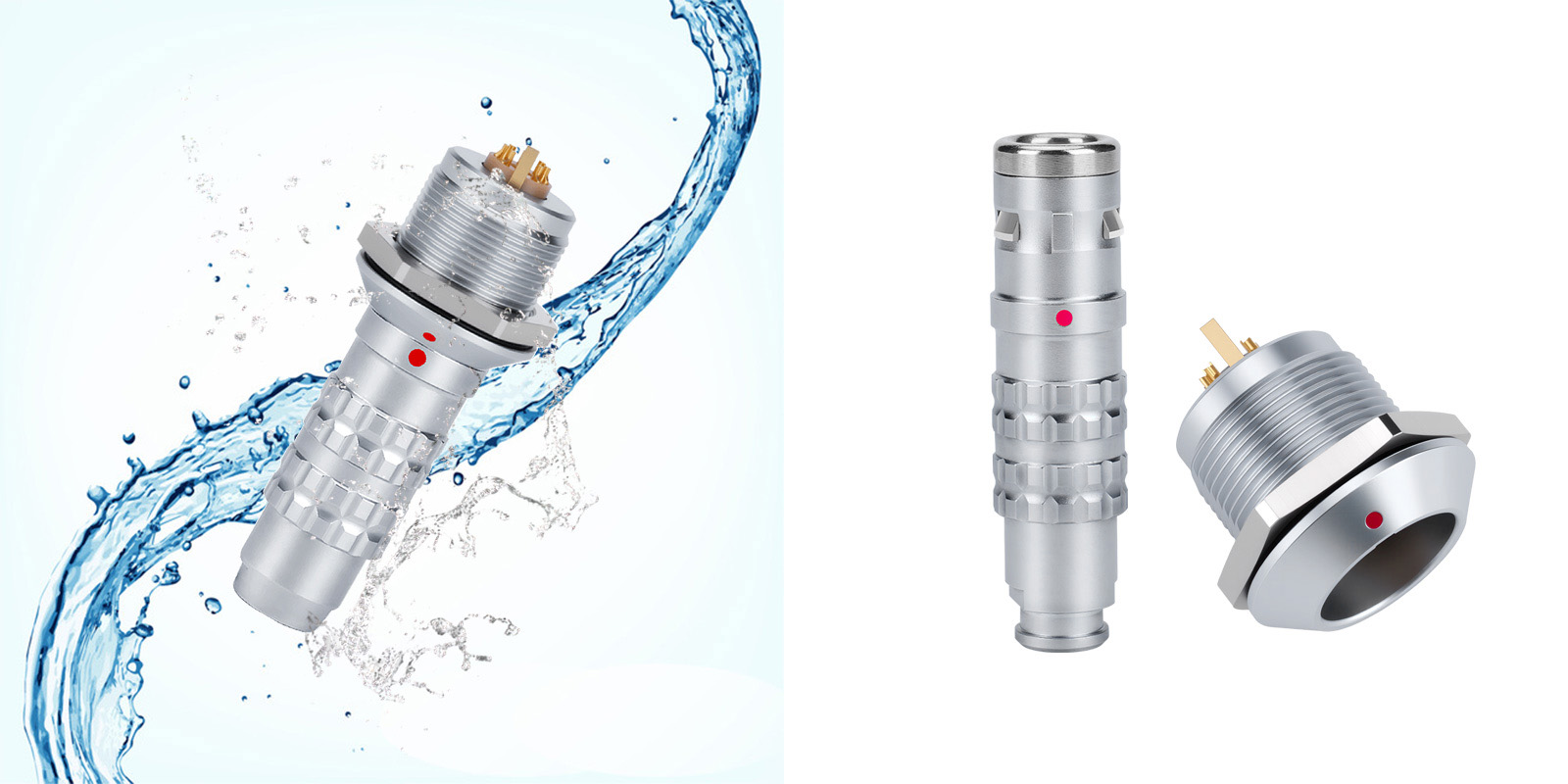
In modern industry, outdoor equipment and medical devices, waterproof connectors with a push-pull mechanism have become the preferred choice for high-reliability connections. Thanks to their compact design, quick connect/disconnect operation and excellent waterproof performance, K‑series TGG connectors are widely used in instrumentation, medical electronics, broadcast and communications equipment, and outdoor devices. Yet many engineers face a common question in practice:

In this article, from the perspectives of materials science, sealing design, operating conditions and maintenance practices, we explain why “K‑series TGG connectors are not absolutely waterproof”, what factors can degrade their protective performance, and how to properly select and maintain these connectors to ensure long‑term connection reliability.
Why do K‑series TGG connectors offer excellent waterproof protection?
To answer the key question — “Are K‑series TGG connectors prone to water ingress?” — we first need to understand their waterproof design principle.
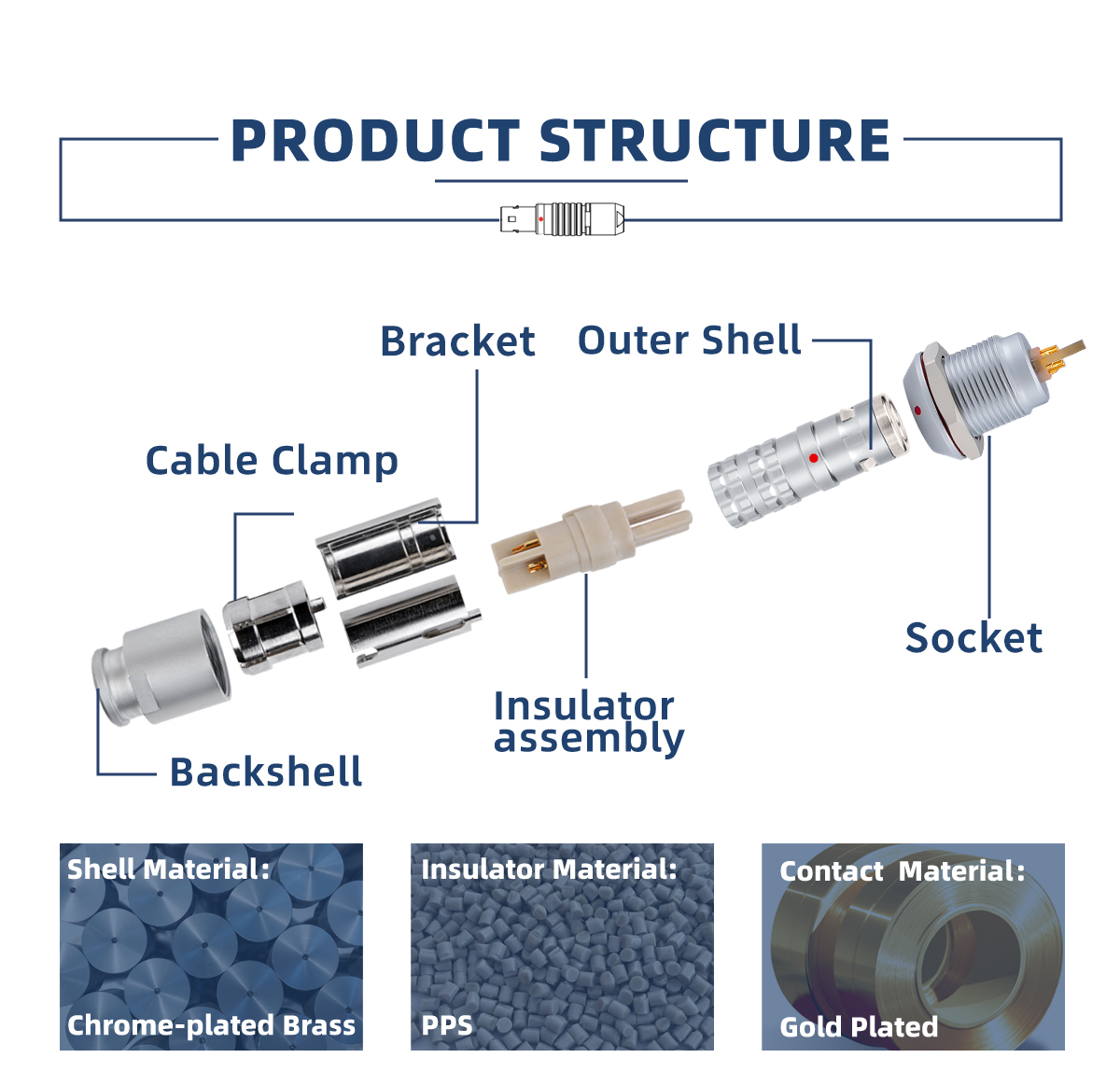
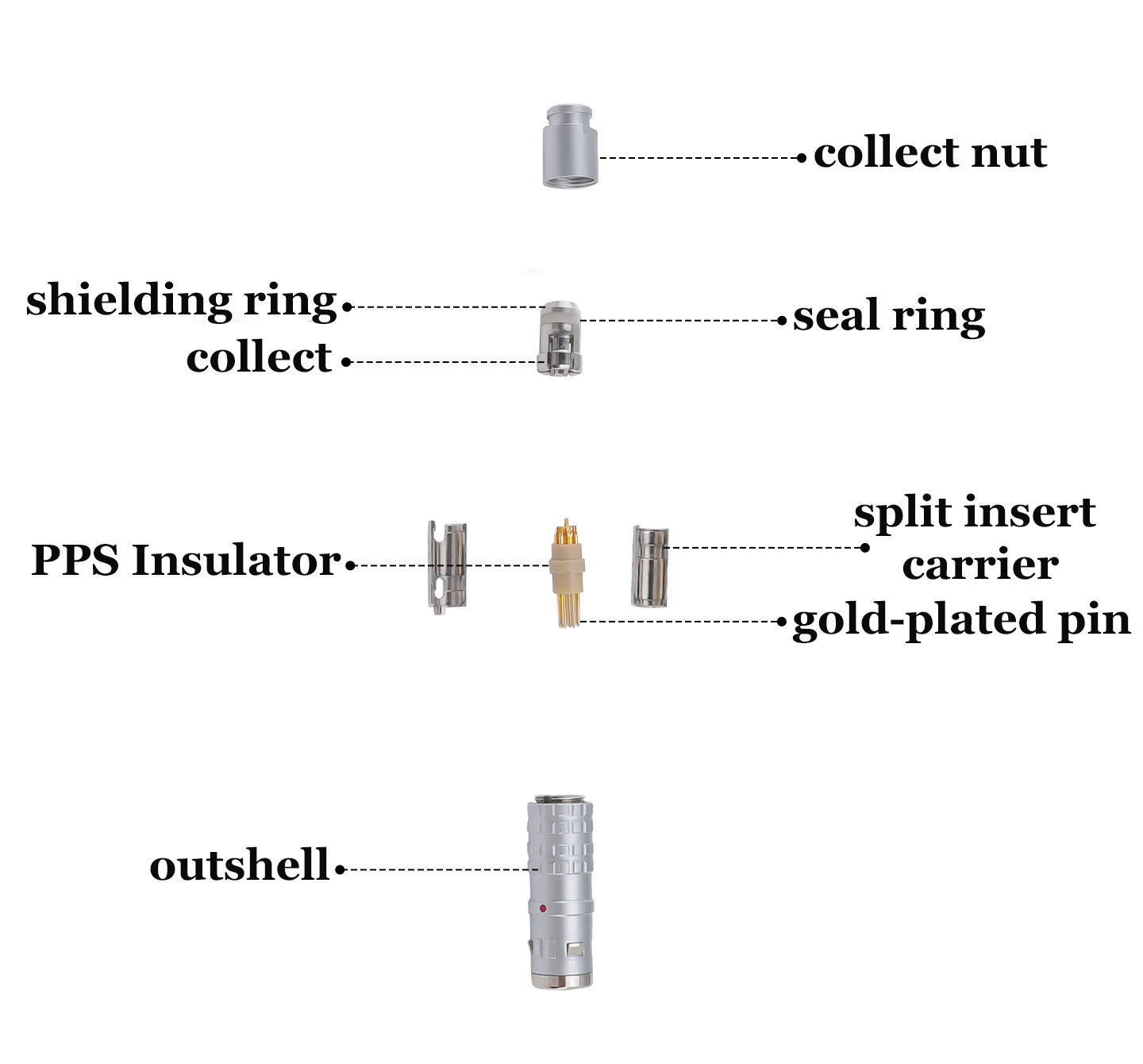
Key structural components and materials of the K‑series TGG connector:
High‑precision metal housing (brass or 316L stainless steel)
Engineering plastic insulator (e.g., PPS or PEEK)
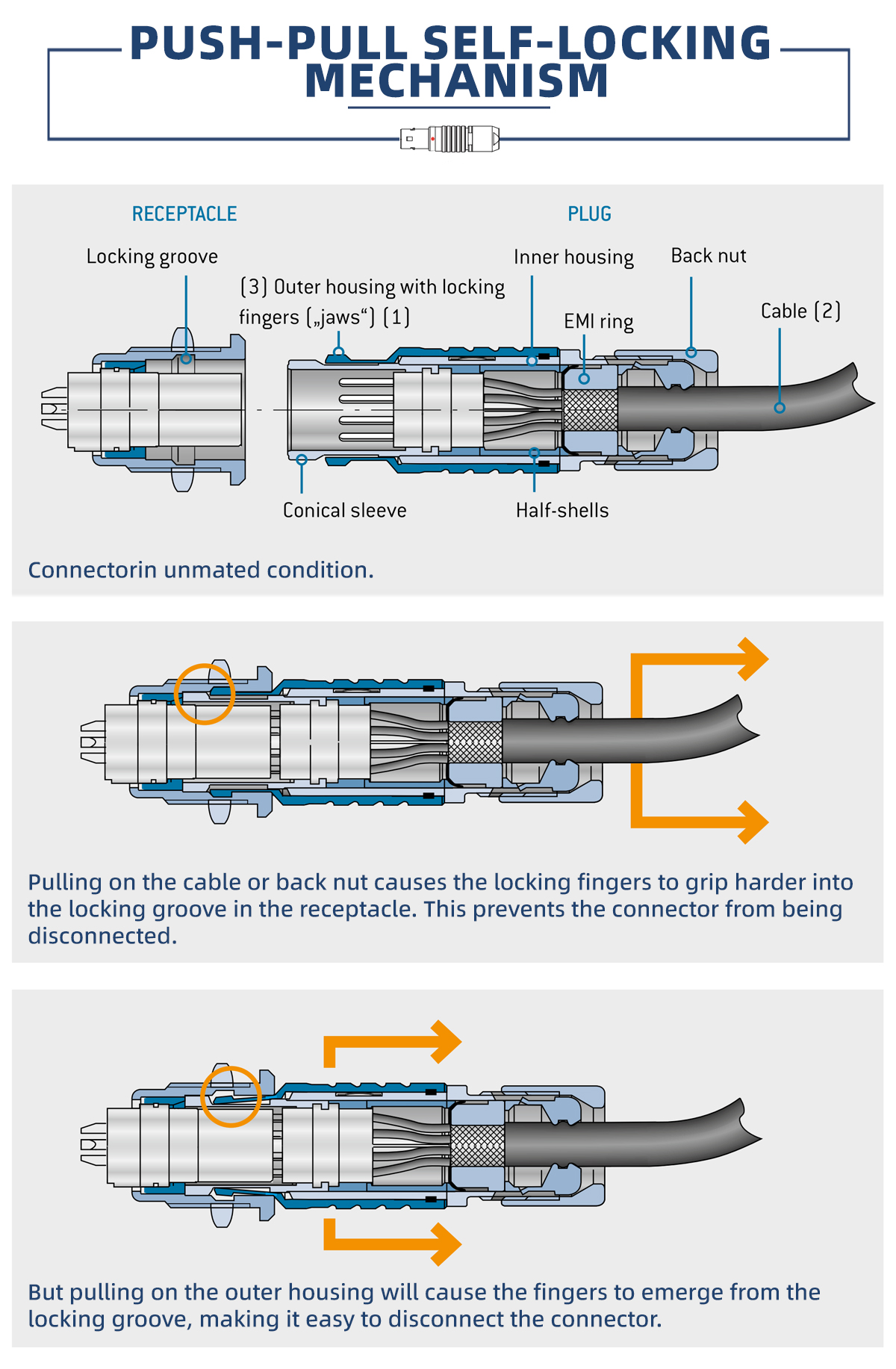
Multi‑lobed push‑pull self‑latching mechanism
Backshell with integrated or customizable rubber seal (typically silicone or fluororubber)
Gold‑plated pin‑and‑socket contacts made of copper alloy
Reliable waterproofing in the mated state is achieved through a combination of the housing O‑ring, internal potting compound, and tight tolerance control of mating surfaces.
Why is the K‑series TGG connector resistant to water ingress?
— The key lies in the dynamic sealing interface.
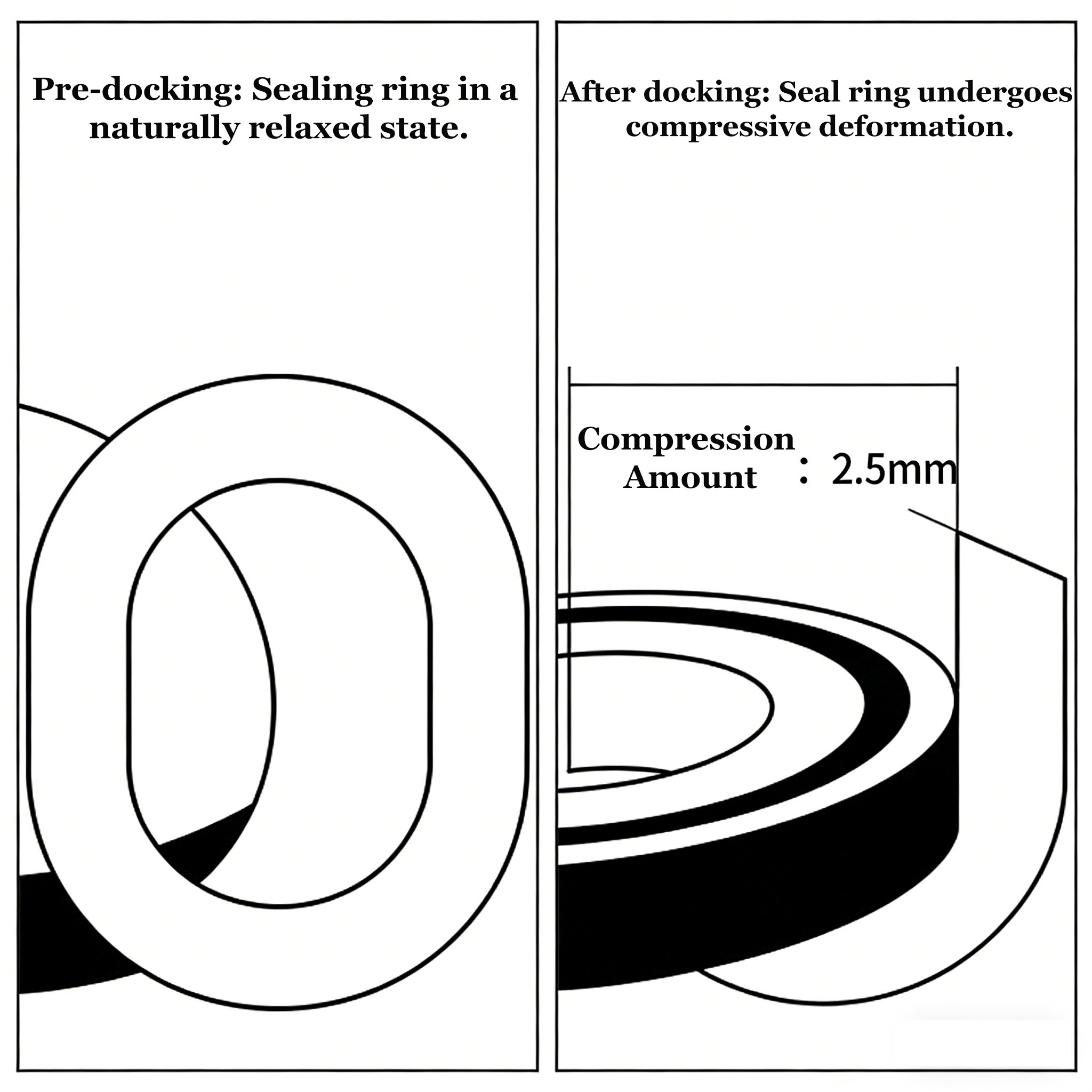
Prevention of liquid water penetration through mating gaps
Protection against dust, salt spray and other microparticles in the contact zone
Stable contact pressure even under vibration or minor displacement
However, “resistant” does not mean “impervious”. A waterproof connector is not indestructible — it is a component with clearly defined IP ratings and application limits.
Can a K‑series TGG connector actually fail and leak water?
Answer: Under specific conditions, its protective performance may degrade. But in most cases, so‑called “water ingress” is actually caused by improper selection or use.
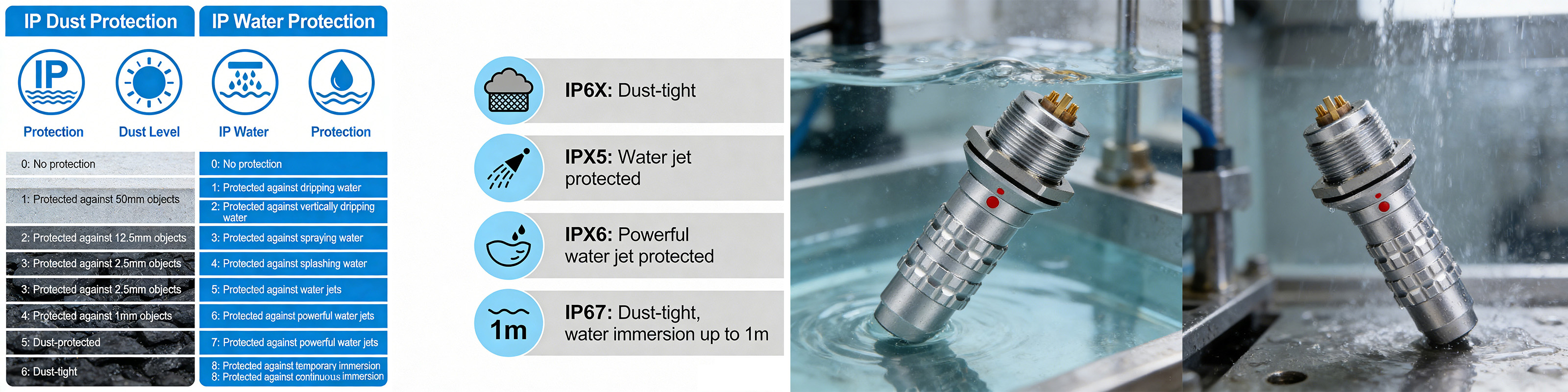
Two points must be clarified:
- A genuine, high‑quality K‑series TGG connector does not easily leak water.When rated IP66, IP67 or even IP68 and used properly under normal conditions with full mating, internal contacts can remain dry for a long time.
- However, the K‑series TGG connector is prone to failures that mimic water ingress.These issues are often wrongly blamed on water penetration, but their real causes are usually:
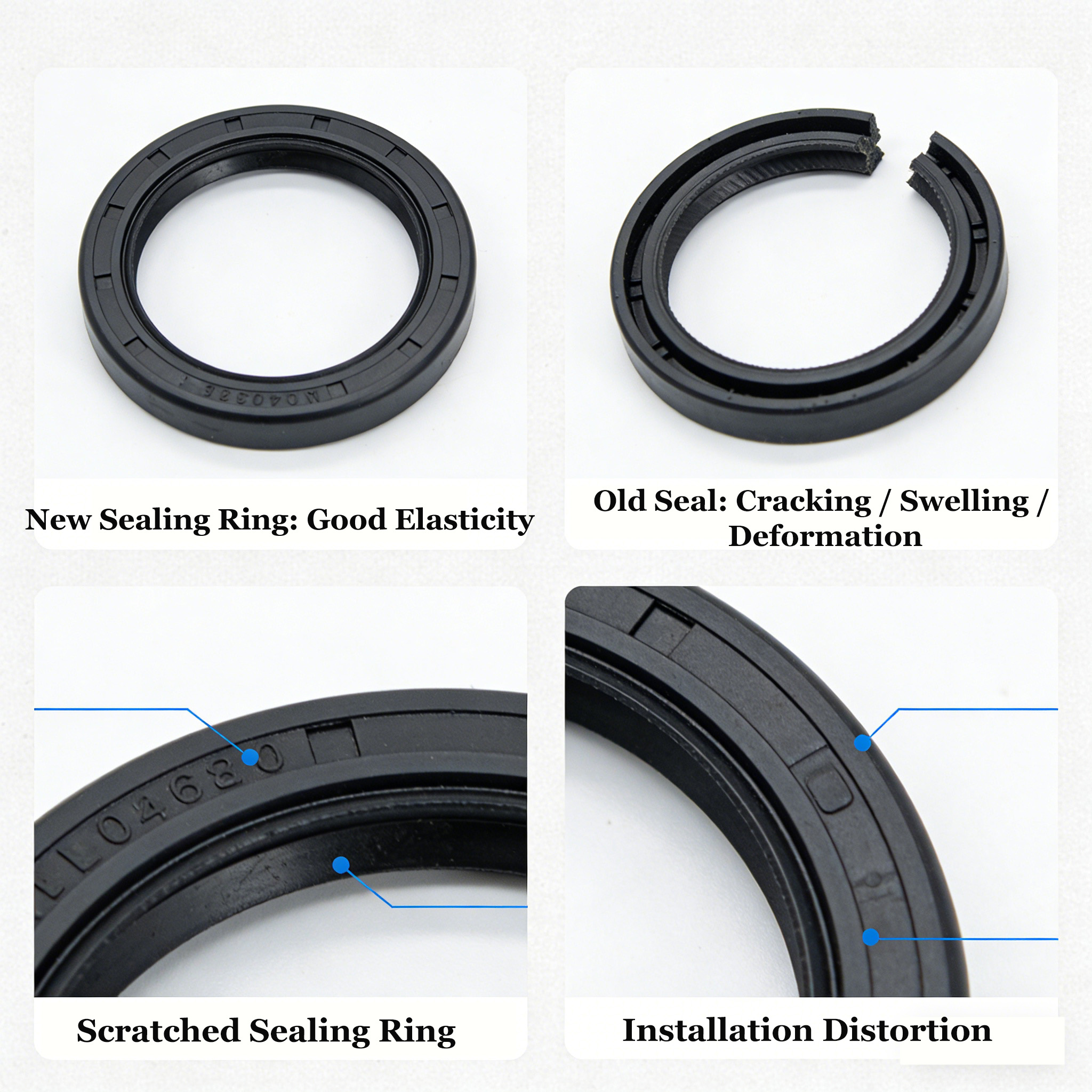
Aging or damage to the sealing ring
Poor sealing at the cable‑to‑backshell joint
Incomplete latching of the connector
Prolonged exposure to corrosive, high‑temperature or high‑humidity environments
Scratches on the housing or sealing surfaces during installation
- This is why many users believe “the K‑series TGG connector is not sealed”, when the actual problem is a failed sealing system or improper use — not necessarily water passing through the connector itself.
Why does the waterproof performance of the K‑series TGG connector degrade?
- To fully answer whether the connector is prone to water ingress, we analyze environmental factors that damage its sealing system.
Main causes of reduced waterproofing:
1. Has the sealing ring of the K‑series TGG connector aged or been damaged?
- If the seal loses elasticity or develops cracks, it cannot effectively fill gaps between housings, leading to micro‑leaks.
- Causes of seal aging:
Prolonged exposure to ozone, UV radiation or high temperatures
Contact with oils, organic solvents, strong acids or alkalis
Mechanical wear from repeated mating and unmating
Cuts from sharp edges during installation
- Important note: Silicone seals are not resistant to oils and certain solvents. In some industrial environments, they may swell or soften and lose sealing ability.
2. Is the seal at the rear cable entry compromised?
- This is the most common — and most overlooked — cause of reported “water ingress”.
- Examples:
Mismatch between cable outer diameter and backshell clamp inner diameter
Lack of heat‑shrink tubing or potting compound for secondary sealing
Excessively small cable bend radius deforming the rear seal
Sustained cable tension creating gaps in the backshell
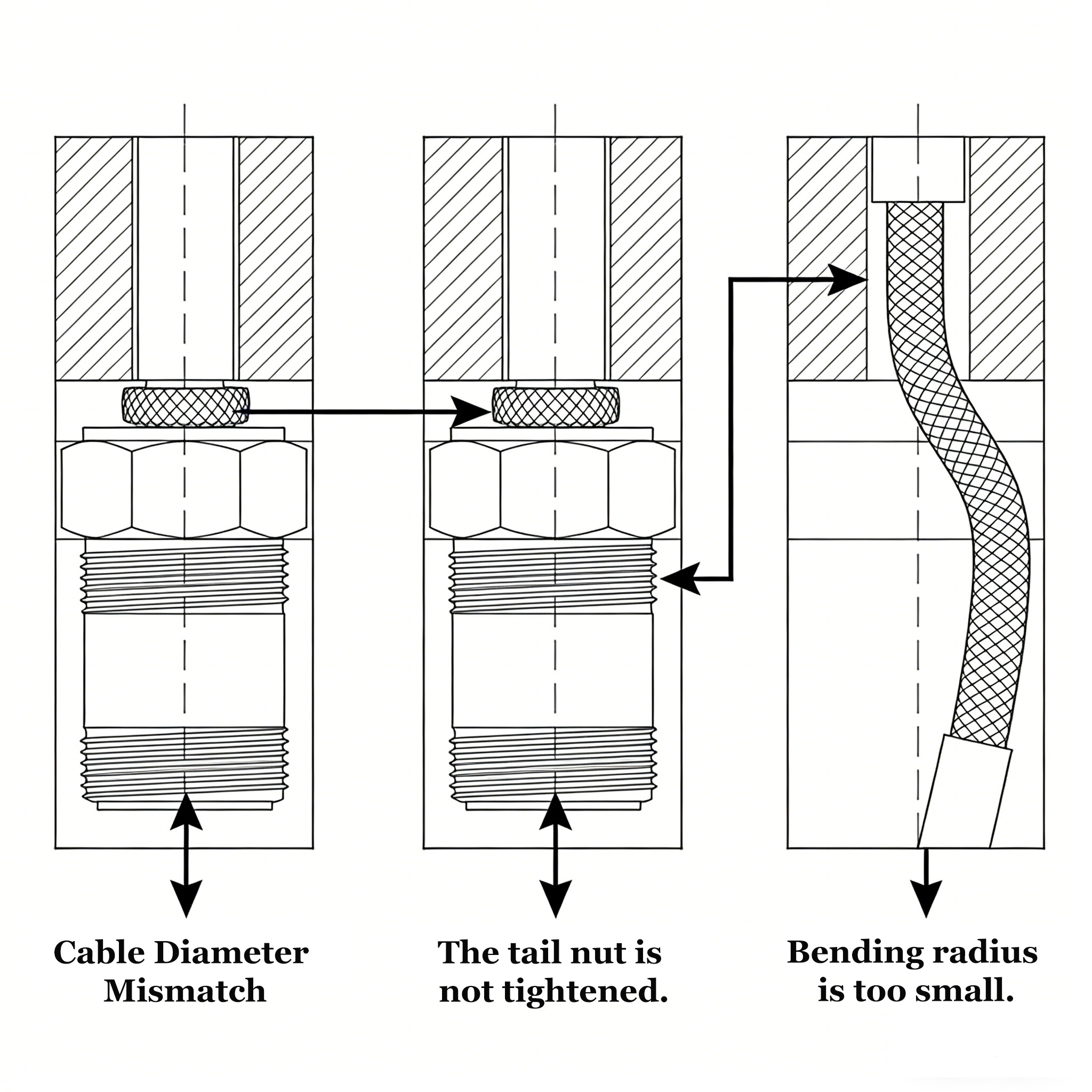
In such cases, water may wick along the cable into the housing, but users often mistakenly assume water entered through the plug‑receptacle interface.
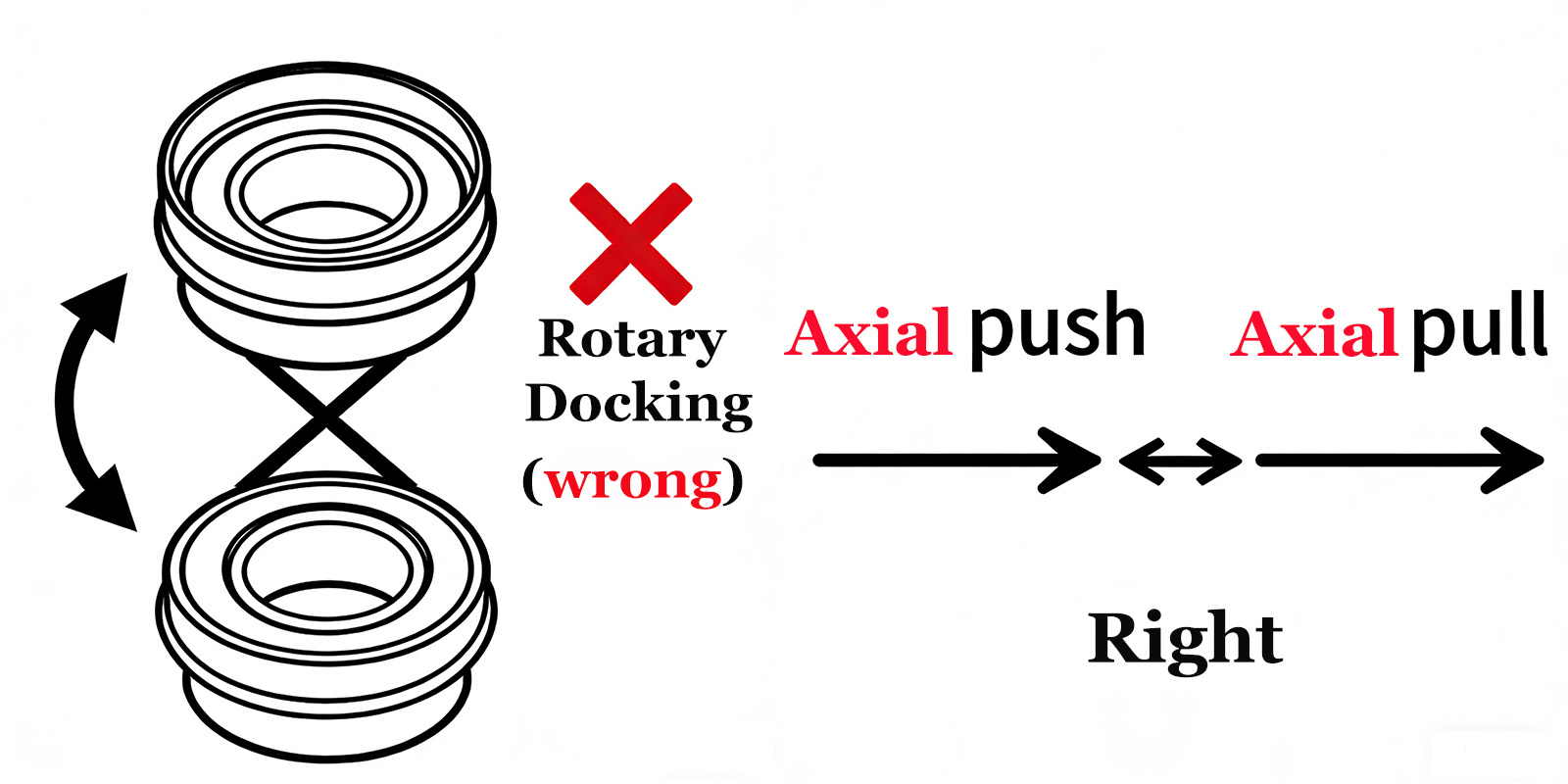
Do installation and usage habits accelerate seal degradation?
Loose backshell nut or clamp
Rotating the connector during mating/unmating instead of axial push‑pull movement
Connecting or disconnecting in dusty or humid environments without reinstalling the protective cap
These habits accelerate seal wear or encourage contamination buildup.
Is the connector exposed to prolonged condensation or high humidity?
High humidity (>90% RH) with sharp temperature fluctuations
Water vapor condensation
Salt spray or electrolyte residues
Is “water ingress” in a K‑series TGG connector false moisture or real failure?
1. “False Moisture” (most cases) — condensation or contamination
Insulation resistance recovers after power removal and ventilation
Dark oxide film on contacts, but no liquid water present
Often occurs under cyclic temperature changes
No visible water inside the cable near the backshell
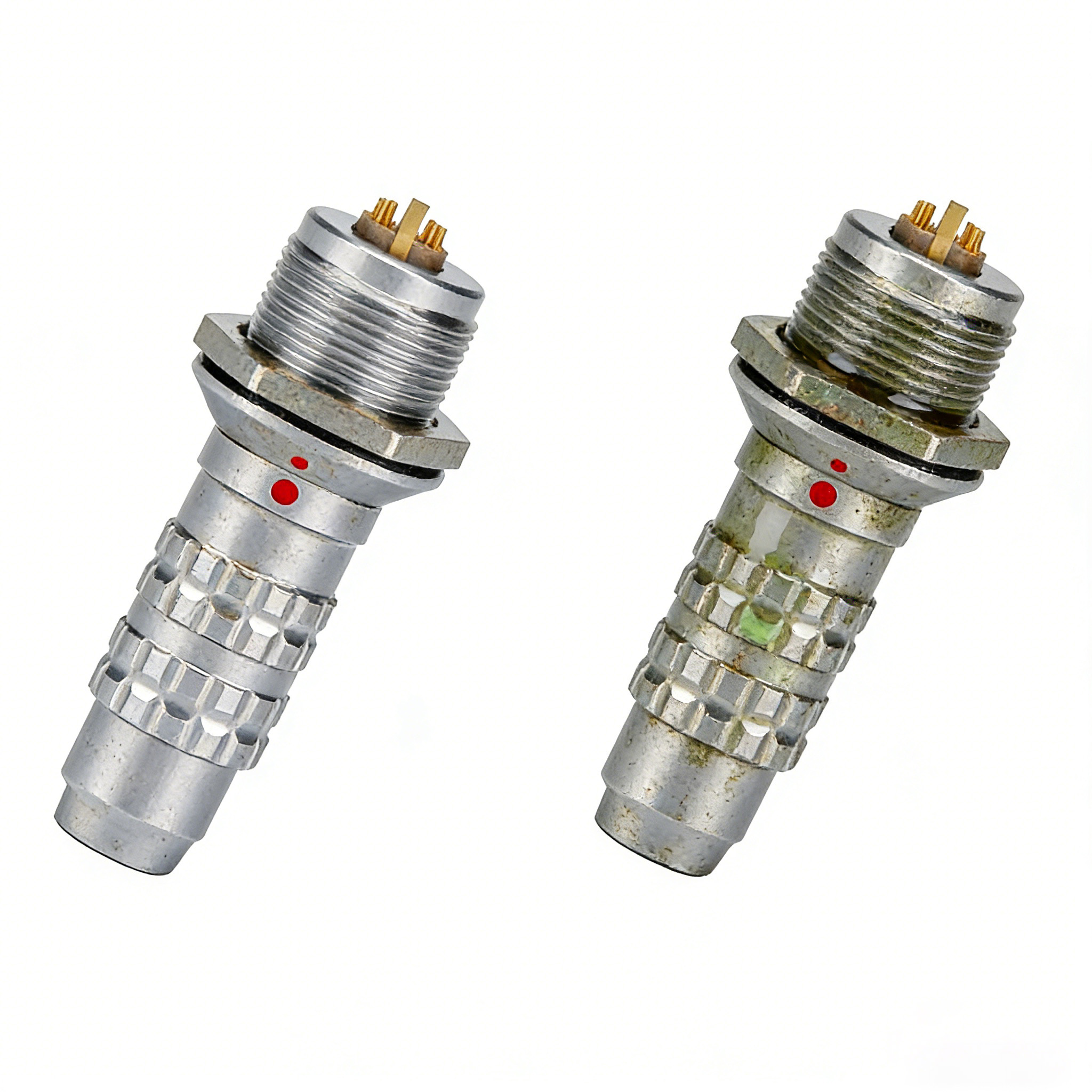
2. “Real Failure” (seal breach) — requires replacement
Visible water or water marks inside the housing
Persistently low insulation resistance
Green patina or signs of electrochemical corrosion on contacts
Deformed, cracked or missing sealing ring
This indicates an actual failure of the connector’s sealing system.
Common usage mistakes that make the K‑series TGG connector “seem unsealed”
- 1.Leaving the connector unmated in humid environments for long periodsThe protective cap only provides dust protection; it does not guarantee sealing during prolonged immersion or pressurized water jets.
- 2.Using excessive force or tools during mating/unmatingThis can:
Deform the housing
Damage the O‑ring groove
Create uneven gaps between mating surfaces
- 3.Using standard seals in salt spray or aggressive environmentsStandard silicone seals are unsuitable for harsh media. Fluororubber (FKM) or special coatings are required.
- 4.Using damaged or aged connectorsEven a seemingly intact seal may lose elasticity due to aging.
How to ensure long‑term reliable waterproofing for the K‑series TGG connector?
Inspect the sealing ring and mating surfaces before connection
Ensure:
The seal is free of cracks and not twisted
Mating surfaces are clean and free of debris
The housing is not deformed or dented
- Confirm secure locking after matingThe push‑pull mechanism should produce an audible click. Gently pull the connector to verify locking.
- Install the protective cap when unmatedPrevents dust, metal shavings or liquids from entering the unmated plug or receptacle.
- Regular cleaning and lubrication (professional level)Using non‑aggressive electronic cleaners and specialized seal lubricants can extend seal life.
- In harsh environments, select higher IP ratings or special sealing materialsFor example:
IP68 (1.5 meters for 30 minutes)
Fluororubber (FKM) seals
Fully potted backshell
Do housing material and coating affect the waterproofing of the K‑series TGG connector?
A 316L stainless steel housing offers better salt spray and corrosion resistance than plated brass, but does not directly increase the IP rating.
Coatings such as nickel or black chrome improve wear and corrosion resistance, indirectly protecting the sealing interface.
Housing machining precision directly affects O‑ring compression uniformity; low‑precision parts are prone to localized leaks.
Main differences between standard and ruggedized versions:
Dual backshell sealing (potting compound + clamp)
Improved sealing ring material
Additional waterproof gasket on the mating surface
Overmolded contacts and insulator as a single unit
Conclusion: Is the K‑series TGG connector really prone to water ingress?
Aging or incorrect selection of sealing ring material
Poor sealing at the cable entry
Incomplete connector locking
Prolonged exposure to condensation or salt spray
Missing protective cap on unmated connectors
Damage during installation
Follow us for more technical information.